Association Pulse · Episode 1
What Churches Needwith Craig Carlisle
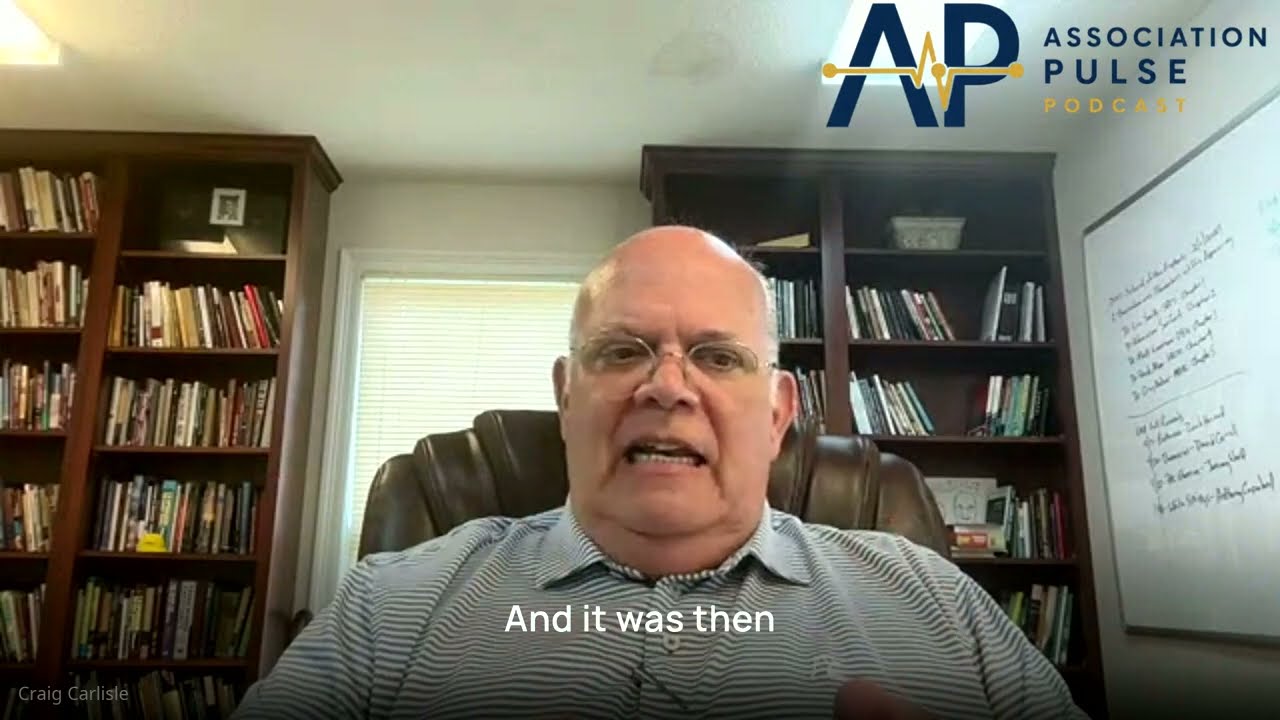
After nearly four decades in Baptist ministry, Craig Carlisle has seen Church life from the Pastor's office, the associational seat, and across state and national Baptist leadership. In this conversation, he shares what he has learned about the pressures Pastors carry, the future of smaller Churches, cooperation between Churches, and why the local Church must remain at the center.
Before you watch
What do Churches actually need?
Not another generic list of programs.
Craig Carlisle has spent roughly three decades as a Pastor and the last nine years serving Churches and Pastors from the associational seat. That change in perspective showed him parts of Baptist life he admits he barely saw while pastoring larger Churches — including the realities facing small Churches and bivocational Pastors.
And on his fourth day as a Director of Missions, one unexpected conversation helped him understand what his new ministry was really about.
A bivocational Pastor walked into his office after being asked by his Church to leave. Craig had never met him. They sat together and wept.
Craig says that was when he realized: “I was here for him.” That conviction runs through this entire conversation.
Watch the conversation
What Churches Need
About this episode
Churches have changed. So has the work of serving them.
Craig entered pastoral ministry during a period when conversations often centered on attendance, Sunday School numbers, baptisms, and Church growth. Today, he sees far more attention being given to discipleship and Church health — and far more concern about whether some Churches will have the Pastors, finances, and leadership needed for the years ahead.
In Etowah Baptist Association, 55 of 78 Churches are part-time or bivocational, which has made the question of future Pastoral leadership especially urgent. Craig describes bivocational ministry not as a second-rate calling, but as an important part of God's work — and one for which Churches need to be intentionally preparing future leaders.
But this conversation goes beyond the future of the Pastorate. Craig and Jeremy talk about what Pastors carry privately, how Churches can cooperate without surrendering their autonomy, why associational leaders must earn trust rather than exercise authority, how changing communities affect established Churches, and why Baptist life must never lose sight of where its real center lies: the local Church.
In this conversation
Six threads worth pulling on.
Pastors Need People, Too
After years of asking ministers how he can pray for them, Craig has heard recurring concerns about wisdom, revival, Church conflict, and family circumstances.
Bivocational Does Not Mean Second-Rate
With most Churches in his Association led by part-time or bivocational Pastors, Craig discusses encouragement, fellowship, resources, and practical training designed around the realities of their schedules.
Who Will Pastor the Next Generation of Churches?
Craig raises a growing concern: Churches need a stronger pipeline for recognizing, mentoring, and preparing men for future Pastoral ministry.
Churches Were Never Meant to Be Islands
Craig describes the Association as a way for autonomous Churches and their Pastors to collaborate, encourage one another, and work together for the Gospel.
Leadership Without Authority
An associational leader cannot command a Church. Craig explains why trust, demonstrated value, relationships, and service matter when leadership depends on influence rather than hierarchy.
Never Forget the Local Church
After nearly four decades of ministry, Craig's closing counsel to the next generation is remarkably straightforward: don't forget the local Church, don't forget to love the people God has entrusted to you, and don't become discouraged.
From the conversation
“I was here for him.”
Craig's first three days as a Director of Missions felt strange after roughly 30 years of pastoral ministry. Suddenly, there was no sermon to prepare, no hospital visit to make, no familiar Church schedule directing his week.
On day four, a bivocational Pastor he had never met walked into his office. The man had served his Church for 14 years. The previous day, the Church had asked him to leave.
Craig sat with him and wept. And the new role suddenly made sense: he was there for the Pastor.
More from this conversation
Short clips from Craig Carlisle
Craig's approach
Love them. Learn them. Lead them.
One of the strongest reusable ideas in the entire interview — a sequence, not a list.
Go where Pastors are.
Hear them preach. Support them. Pray for them. Be present long enough for them to know that the relationship isn't merely institutional.
Don't assume every Church, community, or Association has the same needs.
Craig contrasts ministry in Alabama with an Association he recently visited in Montana, where 18 Churches could be separated by as much as 200 miles. Context matters.
Leadership comes after love and understanding.
Craig's point is especially significant in Baptist associational life because the leader does not possess ecclesiastical authority over member Churches. Leadership depends upon relationships, trust, understanding, and service.
Love them. Learn them. Lead them.
For Pastors
If you're a Pastor, listen for this.
Craig spent approximately 30 years in the Pastorate before moving into associational ministry. That means this isn't simply a conversation about Pastors from someone standing outside the Pastorate.
- —what Pastors are carrying today;
- —why bivocational Pastors need support designed around their realities;
- —preparing the next generation of Pastors;
- —the value of relationships with other Churches and Pastors;
- —Church health versus simply measuring activity;
- —understanding the community around the Church;
- —and remembering that a Pastor is a gift to the congregation he has been called to serve.
For Associational Leaders
If you serve Churches from the associational seat, listen for this.
Craig gets unusually practical about the job itself: you don't automatically have influence because you have the title.
- —earning trust, showing value, and learning the context;
- —being available when Pastors need someone;
- —serving small and bivocational Churches;
- —leading without treating the Association as an authority over its member Churches;
And perhaps most importantly: don't begin by telling Pastors what they need. Listen to what they tell you they need.
For Church Members & Lay Leaders
Your Pastor carries things you may never see.
One of the quieter themes in this conversation is the weight Pastors carry. Craig says that after years of asking ministers how he can pray for them, four categories repeatedly surface: wisdom, revival, Church conflict, and family circumstances.
A healthy Church doesn't merely ask what its Pastor is doing for the congregation. It also recognizes that the Pastor is a man who needs prayer, encouragement, relationships, and people who care for him. That gives ordinary Church members a genuine reason to listen.
In practice
Sometimes strengthening a Church looks like buying a Pastor books.
Craig learned that some bivocational Pastors did not have access to the kinds of study resources he had accumulated through college, seminary, and years of ministry.
So the Association helped provide 26 sets of commentaries to bivocational Pastors.
Don't decide what people ought to need. Ask them. Then solve the need that's actually there.
The next generation of Pastors
Who will Pastor these Churches next?
Craig describes a shortage that isn't merely about today's vacancies. It's about pipeline. In an Association where 55 of 78 Churches are part-time or bivocational, what happens when aging Pastors retire and there isn't another man prepared to step into that pulpit?
Craig argues that bivocational ministry should be presented as a genuine calling rather than a lesser form of ministry, while Churches recover the work of identifying and developing future ministers.
“It is not a second-rate call to ministry.”
Where the center is
The headquarters is the local Church.
Near the end, the conversation widens. Craig talks about Baptist polity, Church autonomy, the Southern Baptist Convention, state convention life, and what he believes Baptists must preserve.
His central point is simple: Baptist life is not supposed to work from the top down. Associations and conventions exist because Churches choose to cooperate. The Churches are not local branches of a denominational headquarters.
Craig puts it memorably when discussing Alabama Baptists: the headquarters isn't merely an office building. It is found across the state, wherever the Churches are.
The Association is the Churches cooperating.
Key takeaways
What Churches Need
By the end of the episode, Craig doesn't give a tidy “five things every Church needs” formula. Instead, the conversation points toward a picture:
Churches need Pastors who are loved and supported.
Pastors need relationships where they can be honest about what they carry.
Smaller and bivocational Churches need resources and training shaped around their actual realities.
Churches need to recognize and prepare future leaders.
Churches need to understand the communities they are trying to reach.
And autonomous Churches can remain fully autonomous while recognizing that they don't have to do Kingdom work alone.

About Craig Carlisle
Craig Carlisle
Director of Missions, Etowah Baptist Association
Craig Carlisle serves as Director of Missions for Etowah Baptist Association in Alabama. Before entering associational ministry, he spent approximately 30 years pastoring established Baptist Churches.
His ministry experience has also included leadership across Alabama Baptist and Southern Baptist life, giving him perspective from the local Church, Association, state convention, and national convention levels.
He grew up in Gadsden, Alabama, and now serves Churches in the community that helped shape him.
About Association Pulse
Taking the pulse of the local Association — one leader at a time.
Association Pulse is a conversation with the people serving Baptist Churches from the associational seat. But the conversations aren't only for associational leaders. They preserve and share lessons that can help Directors of Missions, Associational Mission Strategists, Pastors, lay leaders, and Christians better understand the work happening within and between local Churches.
Each episode explores what leaders are seeing, what Churches are facing, what is working, what is changing, and what should not be forgotten.
Explore All Episodes →
About the host
Jeremy G. Woods
Jeremy G. Woods is the founder of Baptist Association Leaders and CEO of FaithVenture Media. Through Baptist Association Leaders, he creates practical resources and conversations designed to help Directors of Missions and Associational Mission Strategists serve their local Churches well.
He and his wife, Magda, live in Romania with their four children. Together, Jeremy and Magda also run Potter's House Ministries Romania.
Jeremy also hosts the Local Pastor Profiles Podcast and the Church Marketing Conversations podcast.
About Jeremy →Next step
Keep pulling up a chair.
If you care about healthy Churches, faithful Pastors, and the relationships that help Churches serve their communities and carry out the Great Commission together, Association Pulse is for you.
Are you a Baptist associational leader? → Join Baptist Association Leaders